Recipe Grid
| Ingredient | Steps | ||
|---|---|---|---|
| Bring a large pot of salted water to a boil | |||
| 6 ozguanciale or pancettadiced | Renderuntil crisp | Tossoff heat, add pasta water | Serve |
| 1 lbspaghetti | Boilal dente; reserve 1 cup (240 ml) water | ||
| to tastesalt | |||
| 4 wholelarge eggs | Whiskegg sauce | ||
| 4 ozpecorino romano cheesegrated | |||
| 1 tspblack pepperfreshly ground | |||
Prep
Bring a large pot of salted water to a boil
- 1In:
Render
until crisp- 6 ozguanciale or pancettadiced
- 2In:
Whisk
egg sauce- 4 wholelarge eggs
- 4 ozpecorino romano cheesegrated
- 1 tspblack pepperfreshly ground
- 3In:
Boil
al dente; reserve 1 cup (240 ml) water- 1 lbspaghetti
- to tastesalt
- 4In:
Toss
off heat, add pasta water- result of Render
- result of Boil
- result of Whisk
- 5In:
Serve
- result of Toss
Ingredients
- 1 lbspaghetti
- 6 ozguanciale or pancettadiced
- 4 wholelarge eggs
- 4 ozpecorino romano cheesegrated
- 1 tspblack pepperfreshly ground
- to tastesalt
Method
- 1
Bring water to boil
Bring a large pot of salted water to a rolling boil. Salt the water generously so it tastes like the sea.
- 2
Cook guanciale
While water heats, place guanciale in a large skillet over medium heat. Cook, stirring occasionally, until fat is rendered and meat is crispy, about 5–7 minutes. Turn off heat.
- 3
Make egg sauce
In a bowl, whisk together eggs and grated pecorino romano. Season with black pepper.
- 4
Cook pasta
Add spaghetti to boiling water and cook, stirring occasionally, until al dente. Reserve 1 cup (240 ml) pasta water before draining.
- 5
Combine
Add hot pasta to the skillet with guanciale (off heat). Add the egg mixture and toss constantly, adding pasta water a splash at a time until a creamy sauce forms. Do not let the eggs scramble.
- 6
Serve
Divide pasta among serving bowls and top with additional pecorino and cracked pepper. Serve immediately.
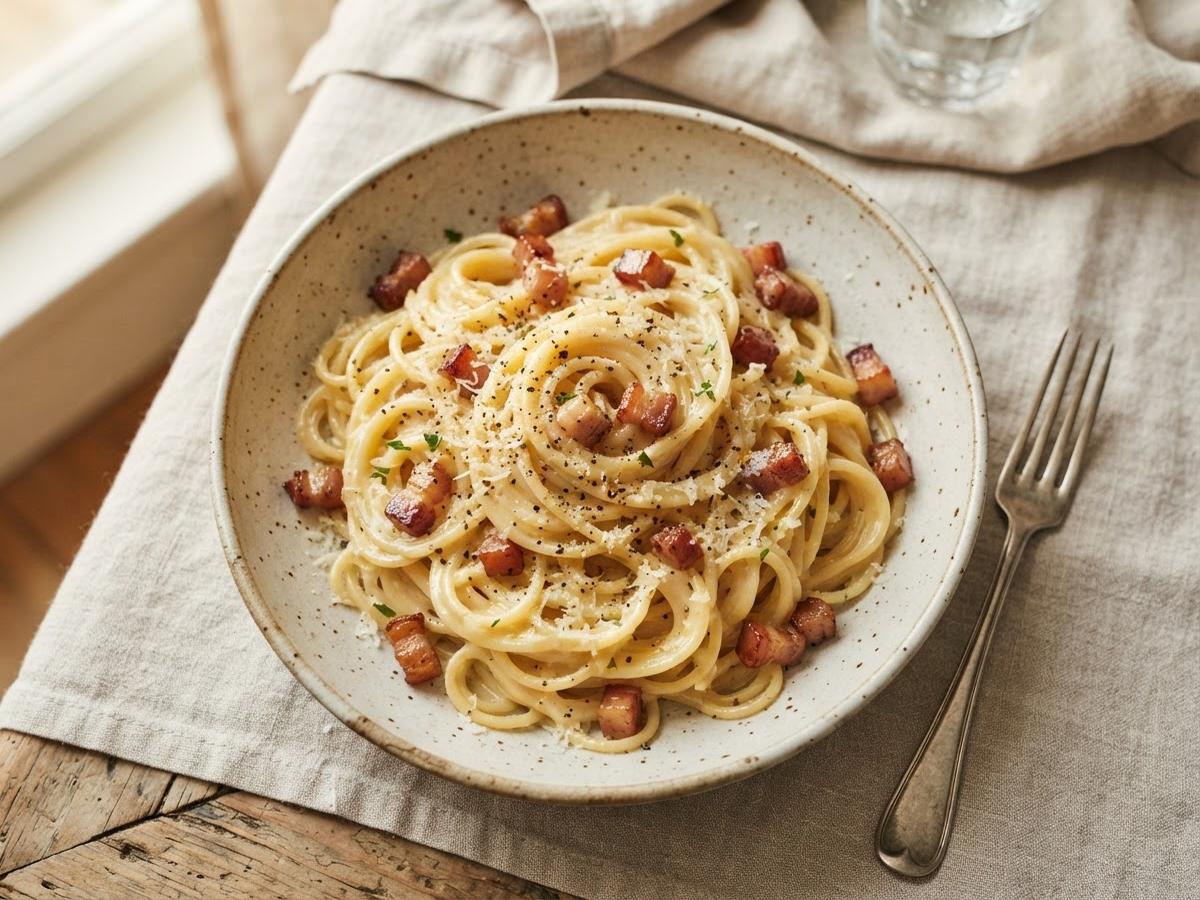
Silky, creamy pasta made the traditional Roman way with egg, cheese, and guanciale (or pancetta), finished with cracked pepper. This is simplicity and technique meeting perfection. No cream, no heavy sauce—just emulsion and flavor.
Keep pasta water hot; it is essential for the sauce. Mix eggs and cheese to combine before adding pasta. Use the pasta's residual heat to cook the eggs gently; do not scramble them.
Adding cream defeats the purpose; carbonara is an emulsion. Cooking eggs directly in the hot pan scrambles them. Adding all the pasta water at once makes the sauce watery.
Best served immediately. Leftovers can be refrigerated for 1 day, but the sauce breaks and becomes grainy when reheated. Not ideal for freezing.
- Why did my sauce break and look scrambled?
- The heat was too high. Always keep the heat off when adding the egg mixture, and add pasta water gradually to cool it down gently. Constant tossing prevents scrambling.
- Can I use bacon instead of guanciale?
- Yes. Pancetta is the most authentic substitute, but bacon works too. Cook until crispy and render the fat. The flavor won't be identical but will still be delicious.
- Why shouldn't I add cream to carbonara?
- Traditional carbonara is an emulsion of egg and pasta water—no cream needed. Cream makes the sauce heavy and masks the delicate flavors of the eggs and cheese.
- Can I make carbonara vegetarian?
- Yes. Omit the guanciale and crisp mushrooms (like shiitake) in oil instead, or use smoked tofu. The dish won't be traditional but can still be tasty.